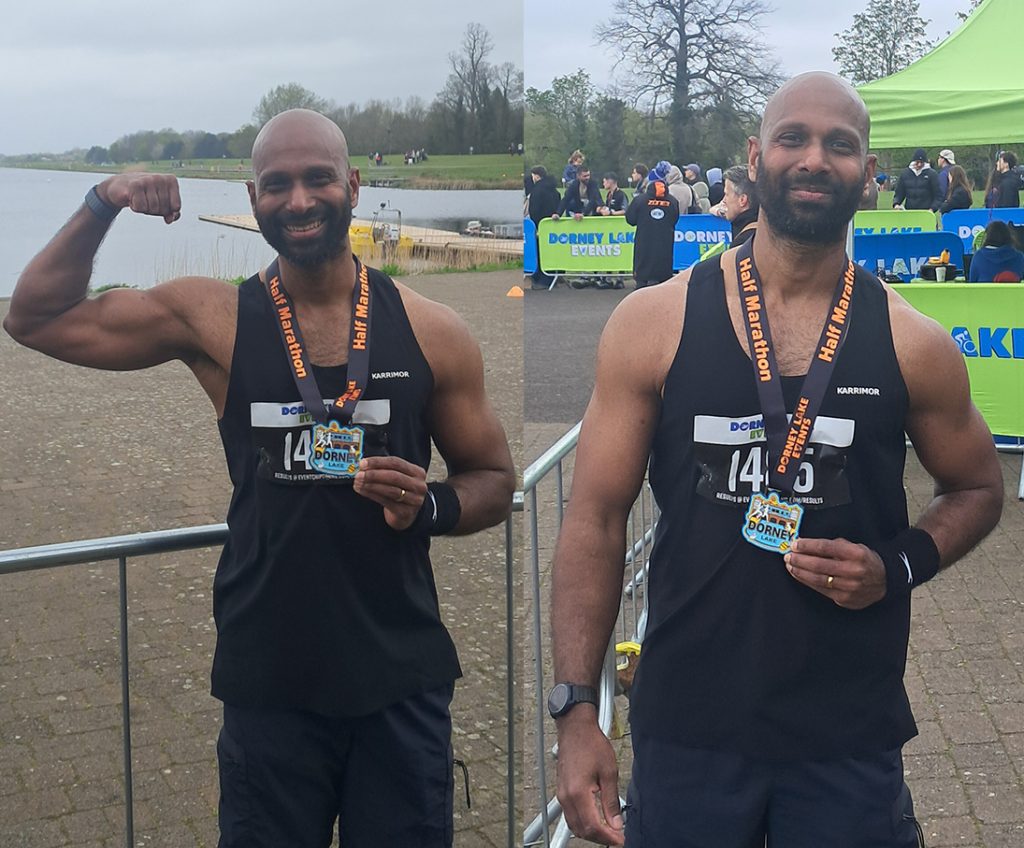
This weekend, I ran my first ever half marathon at Dorney Lake and finished in 01:50:15
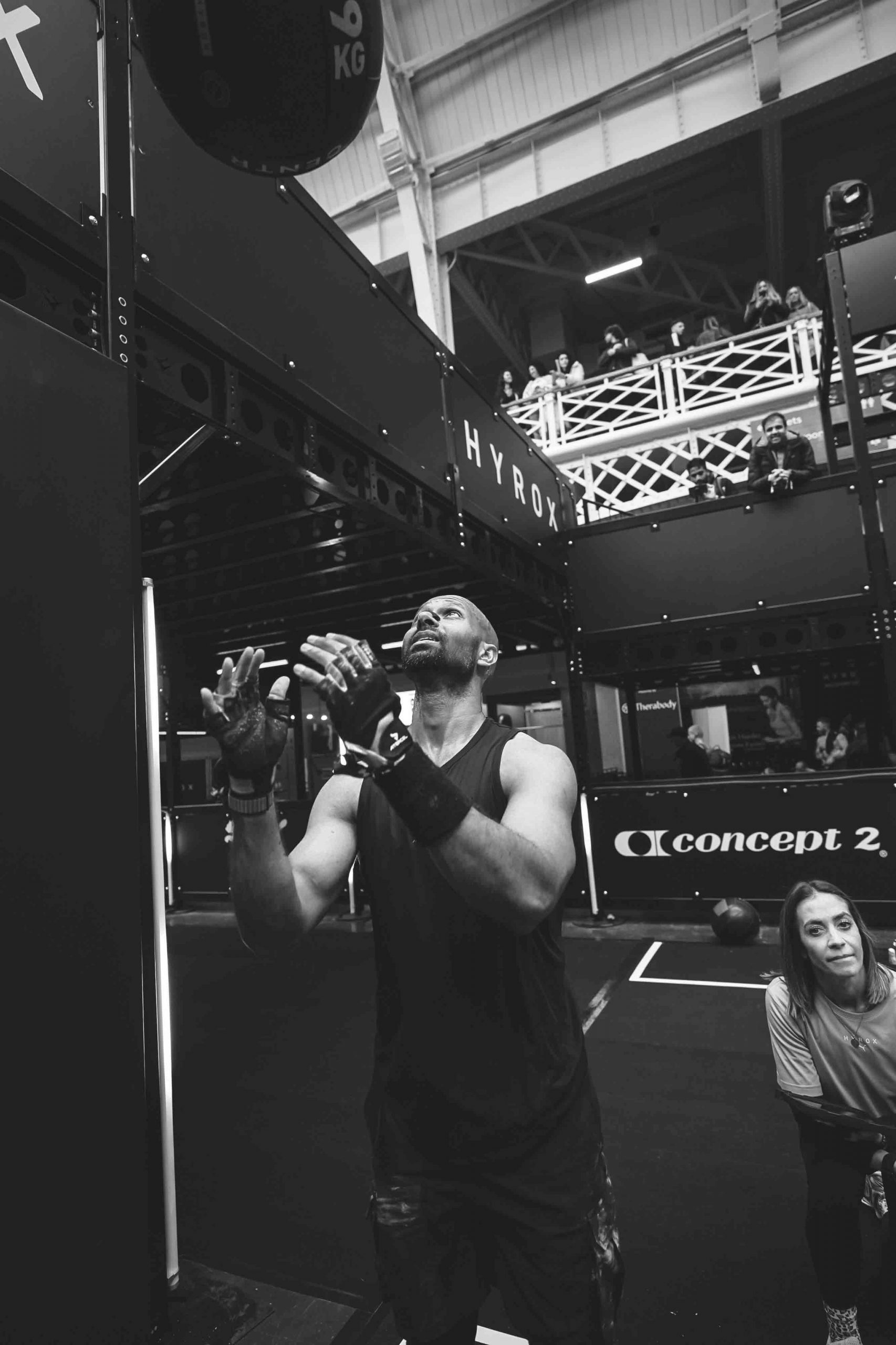
And what makes that slightly more surprising is that I’m currently training for my 5th HYROX race, not for a half marathon.
In fact, I didn’t do any specific half marathon training for this at all. No dedicated running plan, no carefully structured endurance block. Just my normal HYROX training… and the thought process of:
“If I’m doing all this running anyway, I might as well do something with it.”
That’s basically how this happened.
Because if I’m honest, I don’t particularly enjoy running. Or at least, I don’t enjoy it enough to pretend I’ve always dreamed of running 21.1km around a lake for fun.
I enjoy training. I enjoy competing. I enjoy pushing myself. And I enjoy seeing what my body can do.
Running just happens to be part of that. And when you’re training for HYROX, it’s a pretty important part.
Why I Signed Up
HYROX has definitely made me take running more seriously. Not because I suddenly want to become a full-time endurance guy, but because if you want to perform well in HYROX, you can’t keep treating running like the annoying bit between the fun stuff.
At one point I did briefly consider doing a full marathon, but I’ve decided to keep that idea on hold for now.
Mainly because I’m focused on HYROX, I don’t love long-distance running enough to commit to that level of nonsense and my knees would almost certainly have something to say about it.
So the half marathon felt like a much better challenge for this season.
Hard enough to push me. Useful enough to carry over into HYROX. But still short enough that I didn’t need to completely rearrange my life around gels and carb-loading spreadsheets.
The Knee Situation
A big part of this whole process has also been managing some knee pain.
Which, unsurprisingly, doesn’t exactly make you fall in love with long-distance running.
So alongside my HYROX training, I’ve been doing a lot of rehab work, focusing on improving my running form, and generally trying to become a more efficient runner rather than just forcing more mileage for the sake of it.
That’s actually one of the reasons this race meant a lot to me. Because this wasn’t just a case of turning up and hoping for the best.
There’s been a lot of behind-the-scenes work in trying to improve how I move, how I run, and how well my body handles the demands of training. Especially understanding pacing.
And I think that’s something a lot of people can relate to.
Progress in fitness doesn’t always look like perfect, pain-free momentum.
Sometimes it looks like: adjusting, rehabbing, learning, improving… and still finding a way to move forward. That’s real training too.
Race Day at Dorney Lake
I raced at Dorney Lake, which is a great course if you want a flat, honest test.
No huge hills. No excuses. Just a chance to settle into a rhythm and see what you’ve actually got.
And overall, I’m really happy with how it went.
Final Time: 1:50:15
Average Pace: 5:15/km
For a first half marathon, and one I didn’t specifically train for, I’ll absolutely take that.
What I’m happiest about is that I didn’t completely blow up.
Because if you’ve ever raced anything before, you’ll know how easy it is to get carried away early, feel amazing for 5km, and then spend the rest of the race regretting your own confidence.
Thankfully, this was a lot more controlled than that and the one thing I’m most proud of!
What My COROS Data Showed
Because I’m a coach and physically incapable of ignoring data, here’s the quick breakdown:
- Distance: 21.08 km
- Time: 1:50:30
- Average Pace: 5:15/km
- Best km: 4:58/km
- Average Heart Rate: 163 bpm
The biggest positive from the data was that the pacing was actually pretty steady.
It felt controlled early on, solid through the middle, and then properly uncomfortable towards the end, which is exactly how I think a half marathon should feel.
Not easy. Not a total disaster. Just a gradual transition from “this is going well” to “right, now we’re working.” And that’s probably the biggest thing I’ll take from it.
What It Taught Me
More than anything, this race reinforced something I already believe as a coach:
You do not have to love every part of training for it to be worth doing.
Sometimes the things you’re not naturally drawn to are the exact things that help you improve the most.
For me, running has definitely been one of those things.
This race wasn’t about becoming a “runner”. It was about building fitness, testing myself, and doing something uncomfortable on purpose.
And from a HYROX point of view, I know this kind of work will carry over: better pacing, better aerobic fitness, better composure under fatigue and more confidence when things start to hurt.
Which, to be fair, is basically the entire HYROX experience.
Final Thoughts
So overall:
First half marathon: done.
1:50:15 (Net time)
No specific half marathon training.
Knees survived.
HYROX training continues.
And honestly, I’m really glad I did it!